

What Role Does Character Play In The Makeup Of A Leader?
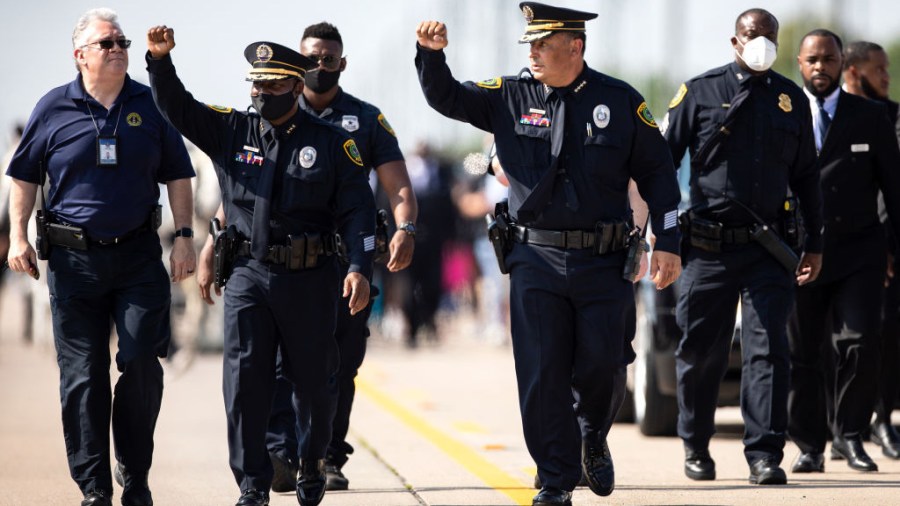
The voice of the people — at least the majority of the people — reigns supreme in a democratic gild, so the people in that democracy should patently have a say in the role of a segment as essential every bit the constabulary. We rely on the police to maintain constabulary and guild and continue citizens condom. In a perfect society, that is exactly what would happen, but guild isn't perfect, and that isn't e'er the end outcome.
Many people call back incidents involving police brutality and excessive force are the natural consequence of a degenerating society plagued with unresolved social and racial inequalities and other problems. Maybe that'due south true to some extent, only information technology's also possible the problem could be rooted in behaviors and practices that date dorsum to the get-go of policing in America. To empathise what that means, allow's take a look at the history of the police in the U.S.
Colonial Night Watch
Although social order has e'er been a core component of civilized gild, actual police forces oasis't always been the potency backside that command. Historically speaking, police force officers are a relatively modern invention. In the earliest days of Colonial America, nigh towns relied on a simple system of dark watchmen to forestall criminal offence and lookout man out for trouble. Night watches were established as early as 1636 in Boston and 1658 in New York, mostly for the purpose of watching for nonviolent crimes like gambling and prostitution.
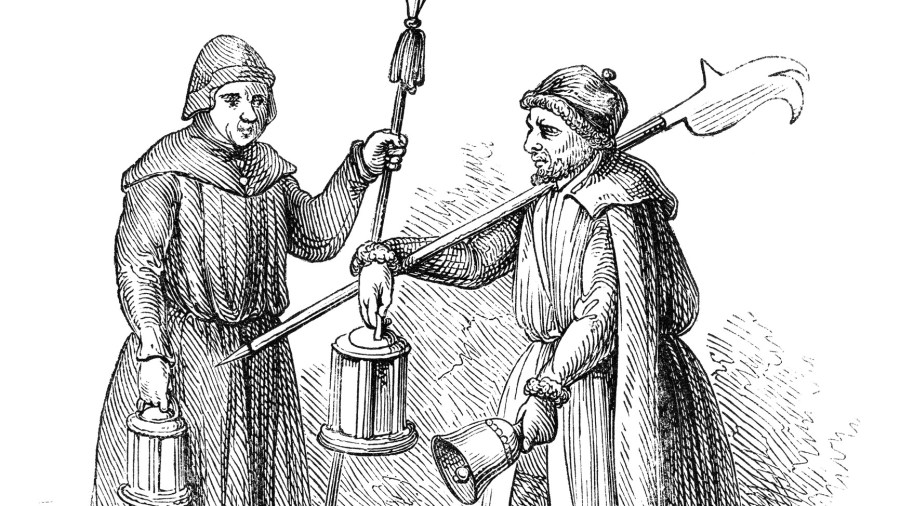
The men in the towns were obligated to participate in dark watches, but many didn't want to do it and didn't take the task seriously. Some were even guilty of drinking or falling asleep while on duty. Wealthy residents often paid others to serve on the night watch in their place, and those they paid were oftentimes (ironically) criminals themselves. In some cases, serving on the nighttime watch was assigned every bit a punishment.
Southern Slave Patrols
Early America was congenital on the idea of exploiting unlike kinds of labor. For people who settled in cities and towns in the Due north, information technology involved exploiting immigrants and the poor. For those in the Due south, it meant relying on slave labor. While night watches dominated in the North, slave owners in the South collection the birth of the Southern law organization past creating slave patrols to enforce laws. The patrols consisted of three to six white men armed with whips and guns.
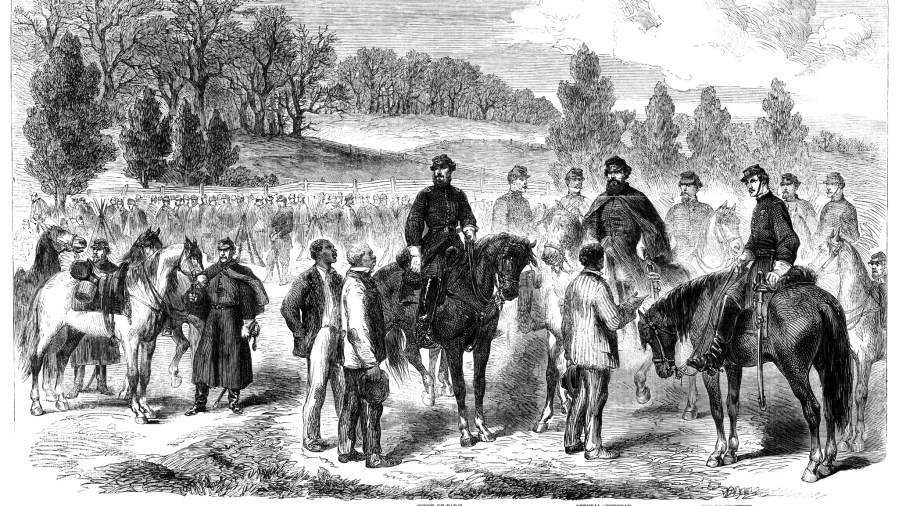
The showtime slave patrol was formed in the Carolina colonies in 1704 for the purpose of tracking runaway slaves and returning them to their owners. The patrolmen also used terror tactics to intimidate slaves and prevent revolts. Following the Civil War, these groups largely transitioned into police organizations that focused intensely on controlling freed slaves by enforcing segregation laws or vigilante groups like the Ku Klux Klan, who operated with the sole purpose of threatening, injuring and fifty-fifty killing Black people and other minorities like Native Americans.
Almost all white men had to serve on slave patrols, whether they owned slaves or non. Unfortunately, this practise created a sense of responsibility in white people that it was their duty to monitor the lives and movements of Black people. Additionally, the concept of treating enslaved people like they were property created the simulated illusion that white people had the right to inflict physical punishment.
Birth of the Organized Police Strength
As cities began to grow larger throughout united states, night sentinel systems couldn't handle the increasing sizes. In the northern states, merchants and other types of businessmen recognized the need for a solution and settled on an idea that would accept the cost of security off their shoulders and go far a public expense. Every bit a result, the get-go official organized constabulary forcefulness began operating in Boston in 1838. Similar organizations started in New York City in 1845, Albany and Chicago in 1851, New Orleans and Cincinnati in 1853, Philadelphia in 1855, and Newark and Baltimore in 1857.
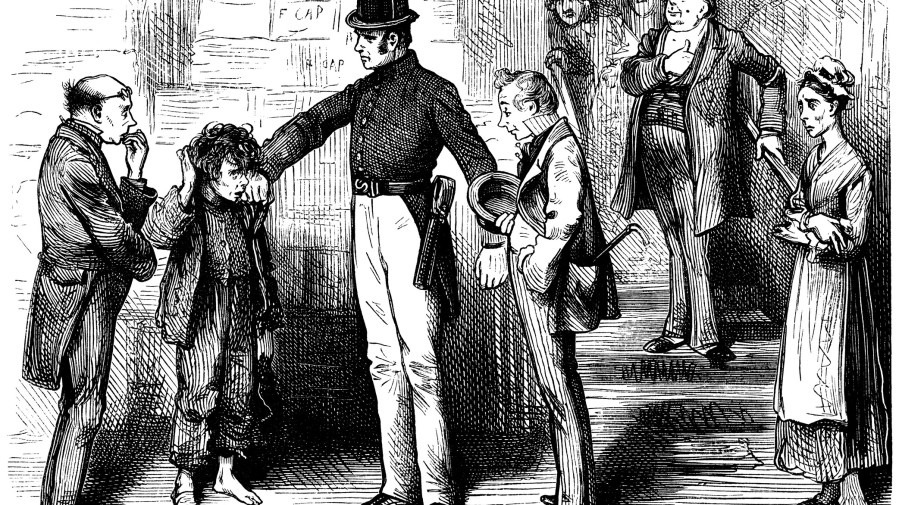
Early police forces had a few things in common with modern police, such as relying on public (city) funding to pay full-fourth dimension officers who weren't volunteers, but they were generally different from what we encounter today. Immigrants continued to pour into the country, and many of those immigrants — Germans, Irish gaelic, Eastern Europeans, etc. — clashed with citizens who had mostly British and Dutch origins. Offense rates started to rise, and newly created police forces were tasked with putting a cease to it — with violence, if necessary.
The virtually powerful, wealthiest Americans controlled the actions of the police and directed them to continue immigrants, minorities and fifty-fifty poor white people downtrodden and "in their place" by criminalizing very minor transgressions and resorting to abuse. Their principal duties should have been preventing law-breaking and maintaining order, but they were politically and economically motivated to keep the social bureaucracy intact instead. Ultimately, all the types of early on policing in the U.S. were established based on two elements: decision-making slaves and controlling minorities.
Rise of the Political Era of Policing (Mid-1800s to Early 1900s)
During the Civil State of war, the military served as the chief grade of law enforcement in the South, followed past sheriffs during the Reconstruction period. The sheriffs were appointed by governors, primarily to maintain police force and order in less populated areas. Most were corrupt and focused more of their attention on maintaining segregation than constabulary and gild. In the cities, police forces became increasingly common, but policing was strongly tied to politics at the fourth dimension. The concept of maintaining law and order usually depended on the self-interests of the most powerful individuals in the city, who determined what "social club" should expect like. Local political leaders oft selected police leaders, and bribes and payoffs were common.
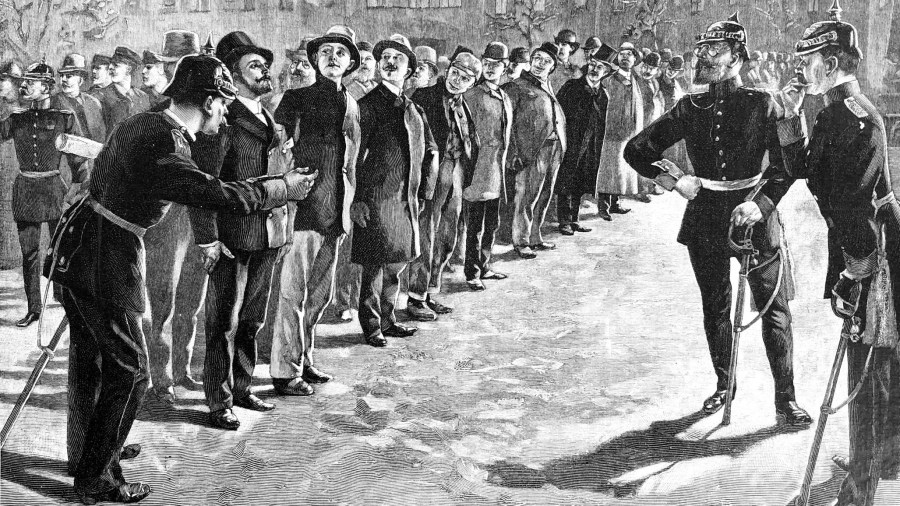
Detective units that focused on investigating crimes first started to announced in police force departments in the 1850s. Allan Pinkerton's famous group of private detectives rose to fame during this period as professionals who put a stop to train robberies and spousal relationship strikes. Urban center police officers also actively focused on preventing strikes afterwards the Civil War to preserve the financial interests of wealthy business owners, and they had no qualms about using barbarous methods to force demonstrators to stop.
In the post-Civil War era, the wealthy upper form and merchants promoted the concept of "dangerous classes" of people. These classes consisted of everyone the elite viewed as inferior, which was mostly poor whites, immigrants and free Blacks. Instead of following logical standards of reacting to crime, police officers began to focus on preventing criminal offense from e'er happening by scrutinizing the unsafe classes.
During this time, alert boxes allowed business concern owners to alert law officers, and patrol wagons started beingness used to ship large numbers of people arrested all at one time, ofttimes those who were striking or protesting. Merchants pressured police officers to clothing uniforms to brand them easier to spot in crowds, a practice that yet exists today. Police officers began conveying firearms during this period, fifty-fifty earlier they were officially granted permission to arm themselves.
By the early 1900s, country police agencies started to appear, mostly to further control workers past enforcing "public order" laws. As a whole, police departments supported specific political allies and persecuted and arrested political enemies. Politicians were behind much of the original types of organized crime, such equally gambling, racketeering and prostitution, and at the plough of the 20th century, police forces were little more than than enforcers for organized crime.
Rise of the Reform Era of Policing (Early 1900s to 1960s)
At the close of the 19th century, urban center police force officers more often than not focused on policing the poor and ethnic groups deemed potentially dangerous by the elite and wealthy members of society who were in charge. During what is known as the Nifty Migration, large numbers of Blacks left the Southward and rural areas and moved to large cities. Equally Black metropolis populations grew, the idea persisted that Blacks were a dangerous class and needed to exist monitored — sometimes to the point of harassment — more than white people.
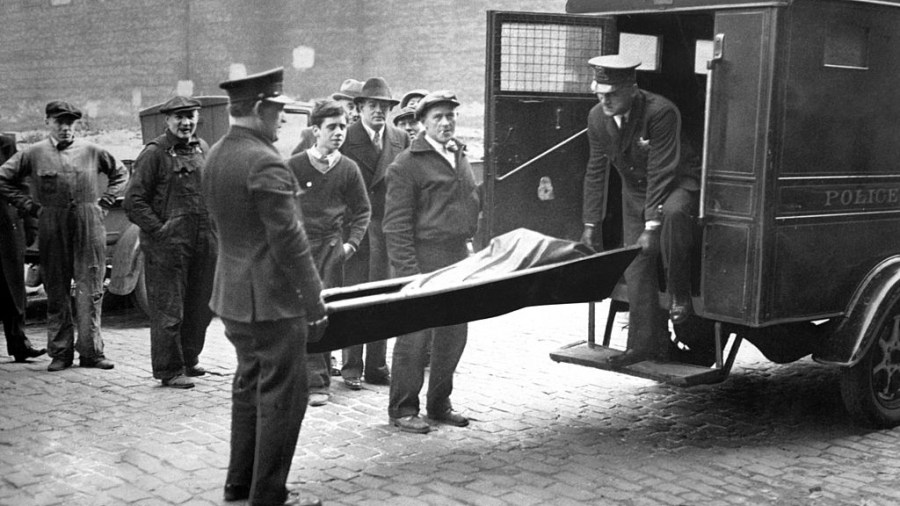
In the early 1900s, August Vollmer — often chosen the "begetter of modern policing" — recognized the problems with American policing and developed a comprehensive plan to reform the system. His approach mostly focused on incorporating social work and psychology into policing. He likewise created a split up judicial arrangement for juveniles and promoted the creation of country and federal police forces to cope with Prohibition violations and the rise of organized crime. Motivated by Vollmer, police forces began to move toward more professional person codes of conduct based on much more respectable behavior.
Attempts at reform sometimes involved investigative commissions that were established to focus on specific types of criminal activities inside police force departments. In New York Urban center, the Lenox Committee (1894) was one of the earliest examples and focused on police extortion related to prostitution. The Curren Committee (1913) as well focused on police force ties to prostitution as well equally gambling, while the Seabury Committee (1932) turned its attention to corruption related to Prohibition (1919-1933), a flow when speakeasies frequently popped upwards in major cities, and officers took bribes to ignore them.
On a national scale, President Herbert Hoover created the Wickersham Committee in 1929 to investigate illegal activities and issues with police forces all across the state. The commission as well conducted the outset investigation into organized criminal offence in America. Other prominent cities that established commissions to spearhead broad investigations during this period included Philadelphia, New Orleans, San Francisco, Atlanta and Los Angeles.
Attempts were as well made to reform constabulary departments past installing new leadership and implementing a testing organization for promotions inside a police department. Departments established specific selection standards and training requirements and incorporated civil service tasks into the job description. The end result was a arrangement with more bureaucracy and a clear chain of control. The new organization separated police from politicians and created special squads for sure types of crimes, such as narcotics, vice, investigations and traffic.
Landmark court cases during this period also forced specific reforms on police force departments by dictating the way sure processes had to exist legally handled. Due process was beginning addressed in Mapp v. Ohio in 1961, when a judge laid down strict rules to forestall illegal searches and seizures in criminal cases. In Escobedo 5. Illinois in 1964, the estimate determined a suspect is entitled to an attorney, and any statements made without an attorney aren't admissible in court. Perhaps the most well-known example, Miranda v. Arizona in 1966, dictates that a suspect must be informed of all rights before they can be questioned.
Police Professionalism Motion (1950s to 1970s)
At the end of the Reform Era, a move known as police professionalism took hold in many police departments across the country. O.W. Wilson first established the concepts of constabulary professionalism in the 1950s. The motility promotes military-style organisation with a centralized command unit and pushed for the added reach of motorized patrols instead of human foot patrols.
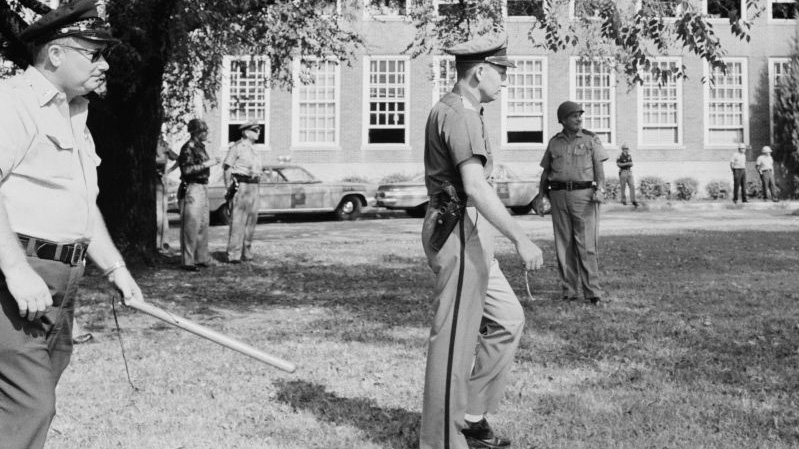
Unfortunately, many of the newly adopted procedures led to resentment of the police in many communities, partially due to racial profiling that targeted minorities equally potential criminals without crusade. Officers isolated themselves from the public and were resistant to complaints and criticism. Past the mid-1960s, police unions were created to protect officers. Most police force departments in large cities had a law wedlock by the early 1970s. In addition to protecting officers, unions implemented compulsion tactics like "blue influenza" and work slowdowns to need things similar pay raises and equipment upgrades.
The "Taylorization" of the police force — terminology borrowed from the factory industry related to optimization — involved downsizing police forces and focusing on job specialization. Patrols went from two officers in a motorcar to one, and new technology, such as the 911 arrangement, was implemented to assistance officers do their jobs. Some of the more than mundane jobs were passed off to civilians to complete. Unfortunately, some of the measures meant to ameliorate their capabilities really widened the divide between police officers and the public.
The relationship became even more than strained when police departments used force to control protesters during the Civil Rights Motion and Vietnam War protests. Many situations got out of hand, and instead of protecting the peace, police force officers became a common source of social tension. Throughout the 1960s, Blacks and minorities began to protestation constabulary handling itself, engaging in everything from peaceful protests, boycotts and sit down-ins to out-of-control riots, and the law response was often harsh and violent.
In 1969, the Stonewall riots lasted 6 days when the LGBTQ community fought back after a police raid of Stonewall Inn in New York Urban center. This event ultimately led to the Gay Rights Move. By the mid-1970s, the country was largely dissatisfied with policing and distrustful of police officers. To make matters worse, enquiry studies in the late 1960s and early 1970s showed that law patrols didn't prevent crime, and assigning detectives to work cases didn't improve rates for solving crimes.
Diversity among police officers remained rare during this menstruum too, with women only accounting for approximately 2% of officers in 1970 and racial or ethnic minorities bookkeeping for less than 10%. Those numbers did eventually amend to 13% women and 25% minorities in 2017.
Ascension of the Community Problem-Solving Era of Policing (1970s to Present)
In the 1970s, police administrators began to recognize that constabulary officers bargain with many behaviors that aren't criminal, such as psychological behaviors and social issues. As a result, they began to focus on ways to address those problems and turn constabulary officers into allies instead of adversaries. Gradually, they initiated community policing strategies that called on communities to work in conjunction with the police force to control law-breaking and solve other community problems, including those related to social issues and mental health.
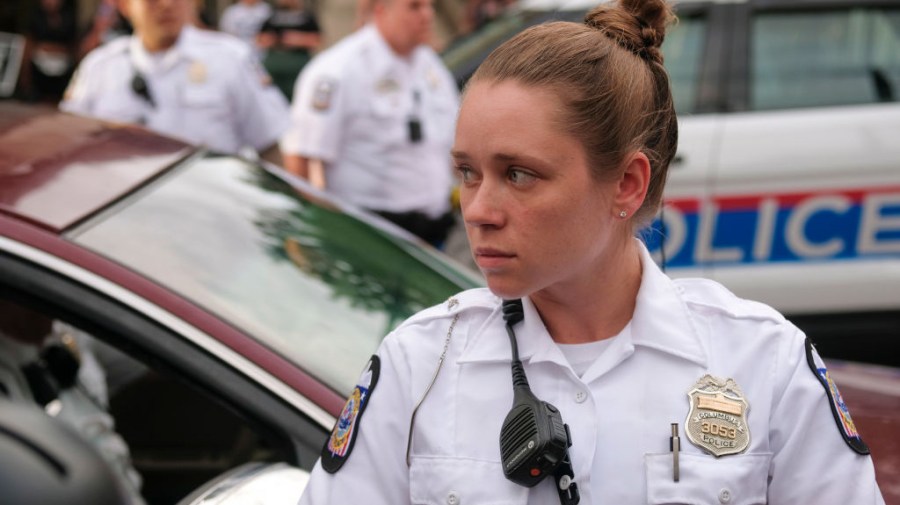
The goal of community policing is to decentralize the law so officers can constitute positive relationships with their communities. If trying to command criminal offence through a police presence and intimidation was unsuccessful, then they believed collaboration and trust could be the answer. The idea is that it'southward far also hard to control crime and maintain order without a strong connexion to the customs.
Community policing uses resources to solve problems rather than just reply to issues equally they happen. By the early 21st century, two-thirds of local police departments relied on community policing strategies around the country for dealing with common local crimes and civic duties. Additionally, new specialty divisions were created as new threats appeared. The 1999 Columbine school shooting triggered the development of new, more effective processes for handling mass shootings, for example.
In 2001, the ix/eleven terrorist attacks led to the establishment of highly skilled counterterrorism units. Unfortunately, the heightened level of diligence combined with the trauma as well led to increased racial profiling in some communities. After ix/11, the number of accusations regarding police force brutality, excessive force and racial profiling started to increment once once more. Some highly publicized deaths led some departments to beginning using torso cameras, just body cameras don't always seem to influence behavior when tensions run loftier.
Finding a Way Forward
Casting officers in roles that make them part of the community is a positive move that has taken constabulary departments equally a whole in the correct direction, but problems still occur at times that result in face-offs between the police and the public. Lingering racist means of thinking near offense that date dorsum to the early on days of policing in America could be partially to blame. If preparation for officers even so includes elements of race, religion or social course when learning how to spot suspicious actions or a potentially dangerous person, then the training protocols certainly need to change immediately.
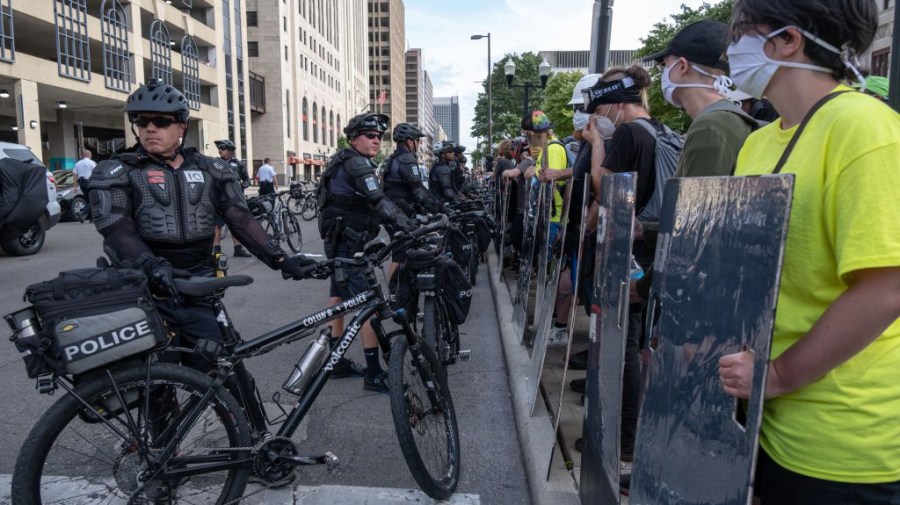
Additionally, modern police budgets eat upwardly all the funds that could go to services needed to help guild, which could in turn reduce the number of people committing crimes and going to jail. More than money spent on social programs versus policing could reduce harm to citizens every bit a whole. This is what most people have in mind when they call for a movement to defund the police. Most people don't want to eliminate the police force; they want to refocus some of the coin to fund social and mental wellness programs to amend handle individuals who create disorder but aren't criminals.
Protests all over America need modify at the to the lowest degree or even the elimination of the police force at the most farthermost. Speaking out against acts of law brutality is our correct and our social responsibleness, merely the situation becomes more complicated when those protests lead to riots, vandalism, arson and other crimes that require police intervention for the protection of bystanders, business owners and holding. When you expect at the history of the police force in the U.S., it'due south clear that the law have come a long way and improved dramatically in the by four centuries, only that doesn't hateful they accept fully evolved to what we need them to be. We can simply hope the contempo protests ultimately lead to the continued evolution that will keep moving policing in a positive direction.

What Role Does Character Play In The Makeup Of A Leader?,
Source: https://www.reference.com/world-view/police-important-democratic-society-f076b4e00ea6871b?utm_content=params%3Ao%3D740005%26ad%3DdirN%26qo%3DserpIndex
Posted by: rutledgepaus1952.blogspot.com
0 Response to "What Role Does Character Play In The Makeup Of A Leader?"
Post a Comment